


Selling your home requires knowledge of property transfer documents, and this guide examines whether a quitclaim deed is an option in Maine. Quitclaim deeds are unique in Maine and are used to quickly transfer property between family members or resolve title disputes. This thorough analysis helps you weigh the pros, cons, and legal implications to make informed decisions. Brendan Buys Houses can help you sell your home. Discover practical advice, downloadable resources, and essential tips for Maine property transactions.
Brief Overview
Using a quitclaim deed, property ownership can be transferred quickly without a clear title. Families and trusted parties use it to quickly transfer ownership in low-risk situations. Parties must conduct thorough title searches to mitigate risks due to the lack of title assurances. Homeowners may choose a cash-for-houses company in Maine and nearby cities for a faster and easier sale. Property transactions using quitclaim deeds in Maine require legal knowledge and compliance with state laws. For a smooth, legal process, consult a lawyer.
Key Highlights
- Quitclaim deeds enable quick property transfers by transferring interest without ensuring a clear title.
- They are used frequently among family members due to the low risk in trusted relationships.
- Title insurance is crucial for quitclaim deeds to protect the grantee from potential claims.
- Maine laws allow quitclaim deeds in trusted scenarios but emphasize thorough title checks.
- Understanding deed types helps choose the best property transfer method for specific needs.
Understanding the Basics: What is a Quitclaim Deed?
A deed of this sort is primarily concerned with transferring ownership of a property, but it does not guarantee that a title is clear, meaning that the property may have a lien, mortgage, or other encumbrance that is not mentioned in the deed, or not mentioned at all. Deeds of this sort are usually used for title transfers for known name changes, or in a family context where a quick deed transfer is needed, or in other situations where the title history is not particularly important. Learning how this type of estate deed works will help facilitate real estate transactions under certain conditions, such as the disposition of a deceased person’s estate.
The Role of Quitclaim Deeds in Property Transactions
When ownership of a property transfers quickly and easily, a quitclaim deed is used. They are especially useful for family disputes and when the integrity of a property title is of little concern. The grantor of the deed gives away their interest to the grantee and is not responsible for who holds the title; therefore, the grantee takes on all the existing encumbrances and claims. This is the ultimate risk for quitclaim deeds, especially when dealing with equitable interests. Their risk can be compensated for by the convenience of a quitclaim deed in spite of the fact that they can be ideal for managing disputes.
Situations where quitclaim deeds are particularly useful in property dealings:
- Transferring property within a family to simplify ownership dynamics.
- Addressing divorce settlements where property division requires rapid finalization.
- Refinancing scenarios where title clarity isn’t initially needed.
- Resolving disputes among heirs when inheriting shared assets.
- Expediting corrections in previous deed errors to fix documentation.
- Conducting business between parties with a high level of trust.
In certain situations, homeowners may choose to sell their house fast for cash in Auburn and nearby cities to simplify the process and move forward quickly. These circumstances highlight how quitclaim deeds can streamline specific property transfer situations effectively.
When to Use a Quitclaim Deed in Maine

Knowing the exact situation surrounding a quitclaim deed in Maine can help you avoid convoluted property transfers. These types of deeds are used for low-risk transactions where the history of the title is less important than the urgency of needing to change the vested ownership. Common uses include familial ownership interest transfers or clearing up small title issues. Considering that quitclaim deeds do not provide a warranty to clear title, potential benefits and risks should be thoroughly examined in advance. Understanding these details is a way to ensure your property transfer in Maine is straightforward and legally compliant.
Key Considerations for Maine Deed Transfers
For deed transfers in Maine, you will need to understand the effects of a quitclaim deed. Maine allows these deeds if there is a measure of trust among the parties, such as with family, or for small title issues. However, you must keep in mind that quitclaim deeds come with no title warranty, meaning the grantee must bear all the risks. To ensure a title transfer is smooth and compliant, it is recommended that you do a title search prior to any transfer. Title search, in this case, allows for an answer to any potential disputes when it comes to changes in property.
How Quitclaim Deeds Affect Title Transfer
Quitclaim deeds play a unique role in how title ownership changes hands. They provide a mechanism for an immediate transfer of ownership rights without assurance of a clear title. This is useful in certain situations. In Maine, knowing how these deeds impact ownership changes is important for avoiding legal problems. They are most useful in situations where people are managing a dispute, transferring property among a close circle of people, or the property rights transfer needs to be done rapidly. Understanding what a quitclaim does regarding title transfers helps make sure that the desired legal effect of the property ownership changes is achieved.
Importance of Title Insurance in Quitclaim Transactions
The absence of risk in transactions involving quitclaim deeds is a myth. Obtaining title insurance is essential for a risk assessment. With a quitclaim deed, the title is unlikely to be clear, and without title insurance, the grantee is exposed to the risk of claims or unexplained defects in the chain of title. Title insurance defends property owners and lien holders from costly legal challenges to ownership, and in Maine, title insurance is an essential component for all property transactions. Quitclaim deeds do not offer plain and clear title assurances, but title insurance will limit the risk of title defects or prior encumbrances to new property owners.
Pros and Cons of Using a Quitclaim Deed

There are several points to consider when deciding to use a quitclaim deed for a property. They can make the process much simpler and quicker when transferring the property to a family member. However, the big risk associated with quitclaim deeds is that they do not guarantee a clear title to the property, which can get the recipient of the deed into a lot of trouble. Rapid transactions can help give a person an advantage in the real estate market, but benefits and risks need to be understood rapidly, which can be a complex process. Depending on the process of the deed, it can help make sure the real estate transaction is legally correct.
Benefits vs. Risks in the Real Estate Market
In real estate markets, the benefits and risks of a quitclaim deed case strategy must be understood. A clear benefit of a quitclaim deed is the quick and easy transfer of property in a trust context. Because the paperwork is less, it is great for the convenience of all involved. Real estate transactions can take long periods of time. On the negative side, there is the risk of no guarantee of the real estate title. This can be problematic in the case of latent liens or claims. Those risks must be calmed through a title search. Return for quitclaim deeds is the reward of a title search. Once all ramifications are understood, they can be rewarded for their work and transactions.
Steps to Successfully Completing a Quitclaim Deed
In order to complete a quitclaim deed correctly, adequate time must be given for each step. It may be as simple as collecting the legal description of the property and the names of the parties involved. However, for the deed to be complete, it will need to be filed with the correct office. There is a specific function for each of these steps when a deed is practiced. Outside of Maine, these states use quitclaim deeds for the purpose of clearing up property disputes and fast-tracking the transfer of properties among known parties.
Essential Information for Preparing and Filing
The first detail of information for the quitclaim deed is the names of all the parties involved in the deed and the accurate description of the property in question. Property descriptions are on tax bills and on the former deed description. It is also recommended to check what form is required to be used in your jurisdiction to execute the quitclaim deed. This form must also be filed with the legal county recorder of the county’s registry of deeds so the deed can be officially recorded and the transfer of ownership can be recorded in the legal public record. Understanding the aforementioned information is useful because it helps in drafting a legally valid and enforceable property deed.
Quitclaim Deeds vs. Other Deed Types
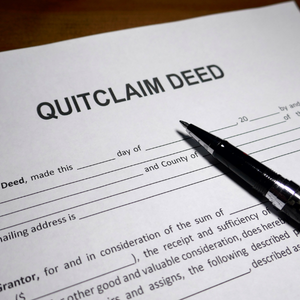
Understanding quitclaim deeds and other types of deeds is important when deciding which is best suited for your situation in the transfer of property. In terms of simplicity, quitclaim deeds are good for transferring title without guaranteeing the title is good, which works for people you are working with whom you trust. In contrast, warranty deeds are beneficial to buyers because they ensure a good title without any issues. Knowing how these types of deeds differ is especially important under Maine’s property transfer laws. To appreciate the impacts of each type of deed, we can continue to look at the differences between quitclaim deeds and warranty deeds.
Comparing Quitclaim with Warranty and Other Deeds
Understanding the difference between quitclaim and warranty deeds is important in real estate. Unlike warranty deeds, quitclaim deeds do not guarantee that there are no liens or other legal problems involving a property. Therefore, quitclaim deeds are useful for transferring property between family members or for quickly resolving a legal issue when the speed of the conveyance is more important than ensuring that the title is clear. Warranty deeds, on the other hand, give buyers greater protection, in that they are assured that the grantor not only holds title but will take legal action to protect his or her title from future claims. Because of this assurance, warranty deeds are more desirable in real estate transactions involving potential disputes and the need for a clear title. Because buyers and sellers of real estate are aware of these differences, they are able to make better decisions in relation to the complex issues involved in the legal use of deeds.
Legal Aspects of Selling a Property with a Quitclaim Deed
In Maine, understanding the legal ramifications of selling a property with a quitclaim deed is critical to a successful transaction. This type of deed affects the buyer’s and seller’s obligations since there are no warranties attached. For property owners who want to sell quickly or sell to family members, quitclaim deed transactions are quick but highly legalistic. Each legal point associated with a property transfer is addressed to ensure compliance with the law and minimize the risk of disputes. Legally compliant transactions are streamlined, and legally problematic transactions are highly complicated.
| Key Steps | Considerations | Legal Compliance | Potential Risks | Documentation |
|---|---|---|---|---|
| Obtain a quitclaim deed form | Evaluate property’s market implications | Ensure accurate legal descriptions | No warranty on title provided | Verify all signatures are notarized |
| Fill in parties’ details accurately | Understand tax implications | Record the deed with the registry | Possible title defects | Keep copies of all related documents |
| Submit the form to the county office | Future resale potential | Follow Maine state regulations | Limited buyer protection | Check for outstanding liens |
This table outlines essential steps for legally compliant Maine quitclaim deed property transfers.
Ensuring a Smooth Transfer and Compliance
Right from the start, compliance with the law will give you the best opportunity for a successful property transfer with a quitclaim deed. Consider starting this process with title research. This search will reveal any active claims or encumbrances on the title. This search will be even more important if you choose to do a quitclaim deed. Quitclaim deeds do not promise that a title will be clear, and the risk will ultimately fall on the grantee. Experts may help you with legal descriptions to fill any gaps and explain any needed details concerning the property. Your deed will be legitimate if properly placed with the relevant governing bodies. Your compliance with this process will improve the success of a transfer of property in Maine and reduce the risks.
Homeowners considering quitclaim deeds in Maine must understand the procedures. Though they speed up ownership transfers, these deeds offer little title defect protection. Consider a title search along with a quitclaim deed to ensure a smooth transition and protect your interests. Thorough preparation and knowledge help you navigate the process’s complexities. Please contact Brendan Buys Houses for personalized advice or questions.
Do you need to sell a property in Maine using a quitclaim deed? Whether you want a fast transfer, want to avoid complications, or simply need a straightforward solution, Brendan Buys Houses is here to help. We provide fair cash offers, manage the paperwork, and simplify the entire process. Ready to move forward or have questions about selling with a quitclaim deed? Call us at (603) 380-4455 for a no-obligation offer. Get started today!
FAQs
Can I sell my house in Maine using a quitclaim deed?
Maine allows quitclaim deeds for house sales, especially among family members. Quitclaim deeds do not guarantee a clear title, so a thorough title search is recommended.
What is a quitclaim deed?
Quitclaim deeds give property ownership without a clear title. For quick transfers among family or trusted parties with low title-dispute risk, it’s used.
Does Maine allow quitclaim deeds?
Maine allows quitclaim deeds for family transfers and other trust situations. Nevertheless, state laws stress thorough title checks to avoid future disputes.
What are the risks associated with quitclaim deeds?
Lack of a clear title is the quitclaim deed’s biggest risk. All property encumbrances and claims are the grantee’s responsibility. Getting title insurance and a thorough search can reduce these risks.
Why does quitclaim deed title insurance matter?
A quitclaim deed does not cover title claims or defects, so title insurance is necessary to protect the grantee. This insurance covers legal defenses against ownership challenges, taking the worry out of property transactions.