


How long a real estate contract lasts in Maine depends on which contract you signed, and the difference can catch sellers off guard. A seller I worked with in Scarborough thought she had all the time in the world. She’d signed a listing agreement with an agent in the spring, watched the contract expire without a single acceptable offer, then signed a new one just before the summer market peaked. By fall, she was back to square one. This experience captures something most homeowners don’t realize until it’s too late: in Maine real estate, time isn’t just a backdrop; it’s a term in the contract itself.
What Is a Maine Real Estate Contract?
The median sale price in Maine in 2025 was $405,000, a 3.8 percent increase from 2024. A property that trades for that kind of money doesn’t change hands on a handshake. Every Maine real estate transaction is governed by a formal, written agreement that spells out the price, the timeline, the contingencies, and what happens if anyone walks away. The document is the purchase and sale agreement, sometimes called the P&S, and it’s the backbone of the entire process.
A real estate purchase agreement in Maine is a legally binding contract between a buyer and a seller. Once both parties sign and agree on the terms, those obligations are enforceable. The document covers the sales price, the earnest money deposit, the closing date, any contingencies, and the property description. Nothing about a verbal agreement protects you. Get it in writing, or it doesn’t exist.
Maine’s standard residential purchase and sale agreement was developed with input from the Maine Real Estate Commission, and licensed brokers are required to work within those standards. Under Maine Real Estate Commission rules, a licensee must furnish copies of brokerage agreements, offers, counteroffers, and all contract types to all parties at the time of signing. This is not bureaucratic formality; it protects both sides from selective memory later.
The contract also has an effective date, which is the day on which both the buyer and the seller have agreed to all terms and the agreement is fully executed. Every deadline in the contract, including inspection periods, financing contingencies, and the scheduled closing, runs from that effective date. Missing a deadline by even a day can give the other party grounds to walk or demand renegotiation. In fast-moving markets like Portland or Brunswick, where competing buyers are sometimes waiting in the wings, that leverage matters more than most buyers expect during the process.
Sellers in Maine sometimes confuse the listing agreement, which they sign with their broker, with the actual purchase and sale agreement, which they sign with a buyer. They’re two separate documents with different durations and different legal consequences. The listing agreement governs the relationship between the seller and the broker. The purchase and sale agreement governs the relationship between seller and buyer. Both are binding, but they bind different parties to different obligations. More on that timing in a moment.
What Types of Real Estate Contracts Are Common in Maine?
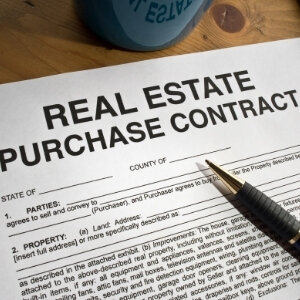
A couple in Saco came to me last Tuesday after their second listing agreement had quietly expired. They’d been trying to sell a Cape-style home near the Eastern Trail for over a year and didn’t realize they’d been operating without an active listing agreement for three weeks. Nobody told them.
Maine sellers encounter several types of real estate contracts depending on the situation. The purchase and sale agreement is the most common form, used for the sale of residential property between private parties. It’s what most people mean when they say “we’re under contract.” The seller’s broker uses a listing agreement to authorize marketing the property, which the seller and broker set at the outset and usually run for a few months at a time.
Buyers sometimes encounter an option contract that gives them the right to purchase a property within a specified period, without an obligation to do so. These come up when a buyer needs time to resolve financing, conduct due diligence on a commercial parcel, or sort out a contingent sale elsewhere. Option contracts can last anywhere from a few weeks to a year, depending on the arrangement. The buyer pays an option fee for that right, and if they don’t exercise the option within the agreed window, they forfeit the fee, and the seller is free to move on (that fee is gone, no exceptions).
Land installment contracts, also called contract for deeds, are a separate animal. The buyer takes possession and pays the seller directly in installments, while the seller keeps legal title until the final payment clears, an arrangement that can run for years. Lease-with-option agreements are common in Maine’s rental market, where a tenant pays monthly rent and holds a purchase option, often with a portion of the rent credited toward the eventual sales price. These arrangements are more common in softer price ranges, where buyers need time to build credit or savings before committing to a full purchase. Sellers who would rather not wait out that timeline often weigh the option against a straight cash offer from cash home buyers in Bangor, ME.
Quitclaim deeds are not contracts in the traditional sense, but they transfer ownership and carry legal weight in Maine. They appear often in estate situations, divorce settlements, and transfers between family members. If you’ve inherited a home in Augusta or Waterville and need to clear title before selling, a quitclaim deed is likely the way to do it.
Cash sale agreements between private buyers and motivated sellers, such as those facilitated by direct buyers, tend to be shorter and simpler than traditional financed agreements. There are fewer contingencies to satisfy, no lender timeline to accommodate, and no appraisal requirement to navigate. Companies like Brendan Buys Houses use straightforward purchase agreements with minimal contingencies, which means fewer chances of it collapsing and a shorter window from signing to closing.
What Must Be Included in a Maine Real Estate Contract?
No real estate purchase agreement in Maine is valid without a price, a legal property description, and signatures from all parties with an ownership interest. Everything else people argue about; those three things are non-negotiable.
Beyond that, a complete Maine purchase and sale agreement should include the earnest money deposit amount, the method and timeline for depositing those funds into an escrow account, and the name of the escrow agent or title company holding the money. Most Maine contracts specify that earnest money is placed in escrow within a day or two of the contract’s effective date. The deposit signals the buyer’s serious intent and provides the seller with some protection if the sale falls through without cause. Earnest money on Maine residential transactions typically ranges from 1 to 3 percent of the purchase price. However, that’s negotiable and can vary based on market conditions and the level of competition in the offer environment.
Contingency clauses are where most negotiations happen. A financing contingency protects the buyer if lenders decline to fund the loan. An inspection contingency gives the buyer a window, usually 7 to 14 days, to hire a professional inspector and either accept the property’s condition, request repairs, or walk away. Appraisal contingencies tie the purchase price to an independent value assessment, which matters enormously in a market where sellers feel entitled to prices that appraisers don’t always confirm. In some competitive offer situations, buyers waive one or more of these contingencies to make their offer more attractive. This strategy carries real risk, and sellers should understand what it means when a buyer waives an inspection: the buyer is accepting the property as-is, but the seller’s disclosure obligations don’t disappear.
Disclosure documents travel with the contract. Maine requires sellers to complete a property disclosure statement covering known material defects, systems, and conditions that could affect value. As of 2024, that disclosure now specifically includes flood hazard risk, which is particularly relevant for coastal homes in places like Harpswell, Boothbay Harbor, or anywhere along the York County shoreline. Any home built before 1978 also triggers a mandatory lead-based paint disclosure, covering the health risks of lead paint and requiring that buyers receive standard educational materials about exposure.
The closing date is set out in the contract. So, who pays what at closing? Maine practice generally splits certain costs, with each party responsible for their portion of transfer taxes. Title insurance expectations, possession date, and any personal property included in the sale should also be clearly documented. If the seller is leaving behind the riding mower, the dining room chandelier, or the firewood stacked beside the barn, write it into the contract (I’ve seen closings stall over a woodstove). Assumptions about what stays and what goes are one of the most common sources of last-minute friction at the closing table.
What Are the Legal Aspects of Signing a Real Estate Contract in Maine?
Can you really be held to a contract you signed under pressure, without reading it fully, on a tight deadline?
Yes. Once you’ve signed a Maine real estate purchase agreement, you’re legally bound to its terms. Reading the entire document before signing matters more than any timeline pressure from an agent. Skip that step, and you’re bound to terms you never actually registered for. A legally binding contract in Maine requires mutual assent (both parties agreeing to the same terms), consideration (something of value exchanged, usually money for property), legal capacity (both parties are of legal age and sound mind), and a lawful subject matter.
People sometimes hear about a three-day “cooling off” cancellation right and assume it covers buying a house. It doesn’t, really. That right comes from Maine’s home solicitation law, which applies to door-to-door sales and runs until midnight of the third business day after signing. A standard purchase and sale agreement you sign at an agent’s office generally isn’t a solicited sale, so buyers shouldn’t count on a built-in window to back out once they’ve signed.
Sellers have fewer automatic exit rights. In Maine, a seller can exit a contract only if the buyer’s contingencies are not satisfied. If a buyer’s financing falls apart and the contract contains a financing contingency, the seller can move on. If the buyer simply changes their mind without a failed contingency, the seller may be entitled to keep the earnest money deposit as liquidated damages and, in some cases, pursue additional legal remedies.
A licensed attorney almost always handles Maine real estate closings, though state law doesn’t strictly require it. A closing can legally run through either a lawyer or a title company, and when a lender orders a title search, the parties are generally free to choose who conducts the closing. In practice, an attorney handles the closing and the title transfer here, rather than the title company or escrow officer that runs the process in many western states. Legal oversight adds a layer of protection for both sides but also introduces cost and timeline considerations that buyers and sellers should plan for. Sellers who’ve closed real estate in Florida, Texas, or California expect a title-company-only process and are often surprised by how heavily Maine leans on legal counsel.
How Long Does a Real Estate Contract Last in Maine?

For years, I thought the question “how long does a contract last?” had one answer. Then I started buying houses regularly and realized the question actually has four or five different answers depending on which contract you’re talking about.
A listing agreement between a seller and a real estate broker lasts 3 to 6 months, with the term set at the time of signing. Sellers can sometimes negotiate a shorter initial term, especially if they’re unsure about the agent or the market. If the home doesn’t sell in that window, both parties can renew or walk away. The expiration date is real; it doesn’t automatically roll over. In a slower market, like the inland towns of Somerset and Piscataquis counties, where days on market stretch well past the state average, a six-month listing agreement can expire before the property finds a buyer, leaving the seller to renegotiate terms or switch agents entirely.
A purchase and sale agreement, the contract between buyer and seller, is a different timeline entirely. Once that document is signed, the clock starts ticking toward closing, which in Maine occurs 30 to 60 days from the effective date for a financed transaction. A cash offer can close in as little as 1 to 2 weeks if both parties are motivated and the paperwork is clean.
Within that purchase agreement, several shorter sub-timelines run concurrently. Inspection periods are usually 7 to 10 days. Financing contingency windows typically run for 2 to 3 weeks, giving lenders time to process and commit. Appraisal deadlines are separate from financing deadlines in many contracts, even though they’re related. Missing any one of those internal deadlines can affect everything downstream. A buyer who misses the inspection deadline doesn’t automatically lose the right to inspect, but they lose the contractual protection that lets them exit based on what the inspection finds. That’s a meaningful distinction.
Agent listing contracts in Maine don’t automatically protect sellers from dual obligations either. Some listing agreements include automatic renewal clauses or “safety periods” that extend the broker’s commission rights for months after the expiration date. Read that language carefully. If you sell to a buyer the broker introduced, even after the listing expires, you may still owe a commission.
For sellers in specific circumstances, like an estate, a pending foreclosure, or a property with title complications, the standard 30-to-60-day contract timeline can feel impossible. That’s one reason sellers in those situations tend to seek out a company that buys houses in Maine with flexible closing dates. Brendan Buys Houses works on the seller’s schedule, which means the closing date in the contract reflects what actually works for the family involved.
What Are the Steps to Close a Real Estate Sale in Maine?
Skip a step in the Maine closing process and the whole chain seizes up. An inspection that gets skipped doesn’t just get caught later by the buyer; it becomes a legal liability that follows the seller long after they’ve cashed the check.
Once a purchase and sale agreement is signed and the earnest money is deposited into escrow, the active countdown begins. The buyer orders a home inspection within the inspection contingency window. In Maine, inspectors look at everything: the foundation, roofing, electrical, plumbing, heating systems, and increasingly, radon levels. Maine has higher-than-average radon concentrations in many regions, particularly in granite-heavy areas like the Kennebec Valley, so a radon test is standard and worth taking seriously. Sellers who know their home has elevated radon and have already installed a mitigation system should clearly document that in the disclosure; buyers who discover it during inspection without prior disclosure will use it as a negotiating point, and in my experience, that conversation gets uncomfortable fast.
After inspections are cleared or negotiated, the buyer’s lender orders an appraisal. The appraiser visits the property and compares it to recent sales in the area. If the appraisal comes in below the purchase price, the buyer and seller have a decision to make: renegotiate, the buyer covers the difference in cash, or the whole thing falls apart. This is where many Maine transactions hit a snag, particularly in markets like Portland or the Lakes Region, where prices have moved faster than comparable sales data (appraisers are always chasing the market). It’s one snag that cash house buyers in Portland, ME sidestep, since a cash offer carries no lender appraisal to clear.
The buyer’s lender processes underwriting simultaneously with the appraisal. Underwriting is where the lender verifies income, assets, credit, and employment (and re-verifies employment right before closing). A financing contingency protects the buyer during this window. Once the lender issues a “clear to close,” both parties can schedule the closing date.
Maine real estate transactions also require a title search to confirm that the seller has a clean title to transfer. The closing attorney handles this, reviewing the chain of title at the appropriate county registry of deeds. Any liens, back taxes, or unresolved judgments have to be cleared before closing. Sellers sometimes discover old liens during this phase that they didn’t know existed, including municipal sewer assessments, old home equity lines that were never formally discharged, or contractor liens from work done years earlier. Addressing those before listing, rather than scrambling to resolve them under closing deadline pressure, saves significant stress, and I’ve seen a single undischarged line of credit push a closing back by weeks.
At the closing table, funds are exchanged, the deed is signed and notarized, and the attorney records the deed at the county registry. Possession transfers at closing, though some contracts allow a brief seller-leaseback period if the seller needs a few days to vacate. Once the deed is recorded, the buyer is the legal owner.
What Happens If a Maine Real Estate Contract Is Breached?

The default remedy most sellers reach for when a buyer backs out is keeping the earnest money deposit. Sometimes that’s the right move, but it’s also frequently the lesser remedy available under Maine law.
A buyer who walks away without a valid contingency excuse has breached the purchase and sale agreement. The seller’s first option is to retain the earnest money as liquidated damages, the amount both parties agreed upfront to compensate for a breach. Most Maine contracts specify this explicitly. A seller who accepts the earnest money as satisfaction of the claim gives up the right to sue for additional damages.
But a seller can choose not to accept the earnest money as the final remedy. Maine law allows an aggrieved seller to seek specific performance, compelling the buyer to complete the purchase. That’s a rare remedy in residential real estate because courts are reluctant to force someone to buy a home, and the litigation costs tend to outstrip the practical benefit. It comes up more frequently in commercial transactions or in cases involving unique properties where the seller can demonstrate that monetary damages alone don’t adequately compensate for that loss.
Sellers can also breach. A seller who accepts a better offer after already signing a purchase agreement with a buyer has committed breach of contract. The buyer in that situation can pursue specific performance, seek the return of the earnest money deposit, and potentially sue for additional damages, including costs incurred in reliance on the contract, such as inspection fees, moving expenses, and loan application costs.
What gets left out of most breach discussions is that both parties often just negotiate their way out. When things go sideways because of changed circumstances, financing issues, or a failed inspection negotiation, the parties sign a mutual release, return the earnest money, and walk away. That’s not a breach; it’s a negotiated exit. It requires both parties to agree and sign. One party can’t unilaterally declare the contract void without a specific legal basis.
Real estate attorneys in Maine will tell you that most breach situations could have been avoided with better contract language at the start. Vague contingencies, missing deadlines, and ambiguous possession terms are where disputes start.
Frequently Asked Questions
How Long Does a Contract Last with a Real Estate Agent?
Your listing agreement with a Maine real estate agent typically runs 3 to 6 months, and the exact term is set when you sign. Some agents will negotiate shorter initial terms, particularly in slower markets. Read the agreement carefully for any tail period clause that could extend the agent’s commission rights beyond the contract’s expiration date.
What Is the Typical Length of a Real Estate Purchase Agreement?
A Maine purchase and sale agreement runs from the effective date to the closing date, which is usually 30 to 60 days for financed transactions. A motivated cash buyer can close in as little as 1 to 2 weeks when the title is clean. The contract itself expires at closing once all obligations are fulfilled.
How Much Do Realtors Charge in Maine?
Agent commissions in Maine typically run 5 to 6 percent of the sales price, paid by the seller at closing out of proceeds. On a home selling near the state median, that’s a real number worth calculating before you decide how to sell. Some sellers find that a direct cash sale nets them more after factoring out commissions, staging costs, and carrying expenses during a longer listing period.
Can a Seller Reject an Offer After Accepting It?
Once a Maine seller has signed and accepted an offer, they’re legally bound to the terms of that purchase agreement. Backing out without a valid contractual basis, like a failed contingency, puts the seller in breach. The buyer can pursue the return of the earnest money and potentially additional damages. If circumstances genuinely change after acceptance, the cleanest path is negotiating a mutual release, but that requires the buyer’s agreement.
Selling a house in Maine involves more paperwork, more timelines, and more legal nuance than most people expect going in. If you’re trying to figure out your options, whether that’s listing with an agent, selling directly, or just understanding what you signed, we’re here to talk it through. No pressure, no obligation. Reach out to Brendan Buys Houses or contact us whenever you’re ready.
Helpful Maine Blog Articles
- How to Do a Sale by Owner in Maine
- How Long After an Appraisal Can You Close in Maine
- Selling House By Owner Paperwork in Maine
- Can Executor of Will Sell Property in Maine?
- Selling a House with Unpermitted Work in Maine
- Selling Parents’ House After Death in Maine
- Should I Replace My Roof Before I Sell My House in Maine
- Tax Implications Of Selling Your Home In Maine
- How To Sell Your Maine Rental Property Without Paying Taxes
- How Long A Real Estate Contract Lasts In Maine
- Who Pays Closing Costs When Selling A House In Maine